Treatment of Allergic Asthma and Breathing Difficulties
Molecular diagnosis and advanced asthma control, without leaving home
Why do I experience wheezing, shortness of breath, or persistent dry cough?

These symptoms are the result of chronic inflammation of the bronchi and hyperreactivity of the lower airways.
Unlike shortness of breath from exertion, in asthma, your immune system mistakenly identifies harmless particles (pollen, dust mites, dander) as a threat. This causes two simultaneous reactions: the bronchial walls become inflamed (swollen), and the surrounding muscles tighten (bronchospasm). The result is a narrowing of the airway that prevents air from flowing freely.
This obstruction causes not only distress or wheezing sounds; if left untreated, it leads to a decline in lung function and drastically increases the risk of a severe asthma attack requiring emergency care, in addition to limiting your physical activity and sleep.
My goal in the consultation is threefold:
1.- PRECISION DIAGNOSIS: It is not enough to say “it’s asthma.” We must confirm via spirometry if the obstruction is reversible and use molecular diagnostics to identify the specific “phenotype” of your asthma (allergic, eosinophilic, exercise-induced) and rule out other respiratory pathologies.
2.- IMMEDIATE TOTAL CONTROL: The goal is for you to have zero symptoms starting today. We will adjust your inhalers (maintenance and rescue) ensuring correct technique to open the bronchi and reduce inflammation, allowing you to resume sports and rest without limitations from the very first days.
3.- PREVENT FUTURE DAMAGE: Poorly controlled asthma causes irreversible lung damage (remodeling). My long-term priority is to evaluate the use of Immunotherapy (Allergy Shots) or, in severe cases, Biologics (Monoclonals) to stop the disease at its immunological source.
Expert Asthhma Treatment
Treatment of Allergic Asthma and Breathing Difficulties
Recover your lung capacity: Molecular diagnosis and advanced asthma control from home
Why do I feel wheezing, shortness of breath, or persistent cough?

These symptoms are the result of chronic inflammation of the bronchi and hyperresponsiveness of the lower airways.
Unlike temporary fatigue from exercise, in asthma, your immune system erroneously identifies harmless particles (pollen, dust mites, dander) as a threat. This triggers two simultaneous reactions: the bronchial walls become inflamed (swollen), and the surrounding muscles tighten (bronchospasm). The result is a “closing” of the airway that prevents normal airflow.
This obstruction not only causes distress or noisy breathing; if left untreated, it leads to a decline in lung function and drastically increases the risk of suffering a severe asthma attack requiring emergency care, in addition to limiting your sleep and physical activity.
My objective in the consultation is triple:
1.- PRECISION DIAGNOSIS: It is not enough to say “it’s asthma.” We must confirm via spirometry if the obstruction is reversible and use molecular diagnosis to identify the “phenotype” of your asthma (allergic, eosinophilic, exercise-induced) and rule out other respiratory pathologies.
2.- IMMEDIATE TOTAL CONTROL: The goal is for you to have zero symptoms starting today. We will adjust your inhalers (maintenance and rescue) with the correct technique to open the airway and reduce mucosal inflammation, allowing you to resume sports and rest without limitations from day one.
3.- PREVENT FUTURE DAMAGE: Poorly controlled asthma causes irreversible lung damage (remodeling). My long-term priority is to evaluate the use of Immunotherapy (Allergy Shots) or, in severe cases, Biological Drugs (Monoclonals) to stop the disease at its immunological source.
Specialized Treatment: Beyond “using inhalers”
Asthma treatment consists of more than just using a rescue inhaler when you feel choked. That is a survival strategy, not control. My clinical approach is structured to modify the disease:
Inflammation Control (Safety and Efficacy)
We use inhaled anti-inflammatory drugs (low bioavailability corticosteroids). By administering them via inhalation, the drug deposits locally in the lung with minimal systemic absorption. This is crucial: we treat the bronchus without the side effects that pills would have on the rest of the body. The goal is to keep the airway open 24 hours a day.
Allergen Immunotherapy (Etiological Treatment)
In confirmed allergic asthma, Immunotherapy (Allergy Shots) is the only treatment capable of modifying the natural history of the disease. Through the controlled administration of the causative allergen, we aim to “re-educate” the immune system to stop reacting excessively.
Biological Treatments (Severe Asthma)
For cases of severe asthma that do not respond to conventional therapies, I have experience using monoclonal antibodies (biologics). These advanced therapies block specific molecules in the inflammatory cascade, offering a solution for patients who have previously failed to achieve symptom control.
Differential Diagnosis and Common Errors
It is fundamental to classify the asthma phenotype to select the correct treatment. We do not treat Allergic Asthma (triggered by dust mites, pollen, or dander) the same way as Non-Allergic Asthma (triggered by exercise, cold air, or viruses).
Critical errors we correct in consultation
- Poor inhalation technique: A high percentage of patients do not perform the maneuver correctly, preventing the drug from reaching the lung. Reviewing your technique is an essential part of my consultation.
- Abuse of rescue medication: Frequent use of short-acting bronchodilators relieves the immediate symptom but masks underlying inflammation. If you use your rescue inhaler more than twice a week, your asthma is not controlled.
- Normalization of dyspnea: Assuming shortness of breath or nocturnal cough is “normal” is a mistake. The therapeutic goal is always the absence of symptoms and the ability to live a fully active life, including sports.
Request a specialized assessment
Precise diagnosis to recover your quality of life today.
- Treatment of Allergic Asthma and Breathing Difficulties
- Why do I experience wheezing, shortness of breath, or persistent dry cough?
- Expert Asthhma Treatment
- Treatment of Allergic Asthma and Breathing Difficulties
- Why do I feel wheezing, shortness of breath, or persistent cough?
- Specialized Treatment: Beyond "using inhalers"
- Differential Diagnosis and Common Errors
- Request a specialized assessment
- Expert Asthhma Treatment
- What types of asthma are there?
- How to avoid allergic asthma without drugs?
- Should I treat my asthma?
- What mistakes does asthmatic patients frequently make?
- What is the relationship between Asthma and Covid?
- Expert Asthhma Treatment
¿What is allergic asthma?
Asthma is a chronic disease that causes inflammation of the airways (bronchial tubes). This inflammation makes these pathways very sensitive and overreact to allergy-producing proteins or other stimuli. When this inflammation occurs, the airways close, preventing the passage of air into the lungs. It is called allergic asthma when it is produced by a substance that causes us an allergy, called an allergen.
Unlike other respiratory diseases, asthma is typically characterized by being reversible with treatment, which does not mean that treatment can eliminate asthma but simply control it.
¿What are the symptoms of allergic asthma?
The bronchi are the main airways that connect the air we breathe from the mouth and nose to the lungs. Once we know that they are shaped like a tube, the patient will be able to understand the symptoms of asthma simply changing the morphology of this tube to that of a flute. Due to the inflammation, the caliber of the tube is reduced, making the passage of air more difficult and thus producing characteristic whistles. Having figured this out, it’s easier to understand that asthma symptoms include wheezing, coughing, and tightness in the chest. Characteristically, it is usually worse at night or upon waking.
If the closure of these bronchi is too pronounced, it can endanger the life of the patient since the air will not be enough to maintain the vital organs.
¿How to treat allergic asthma?
Essentially there are three types of treatment: Those intended to quickly opening the bronchi without altering the disease and those intended to progressively opening the bronchi by targeting the inflammation that causes the closure of the bronchus. Both can be combined or are not dependent on the type of patient.
¿How to quickly opening the bronchi?
Short-term treatment includes those drugs capable of rapidly opening the bronchus (technically called beta-2 agonist bronchodilators) thus allowing air to pass into the lungs, avoiding serious complications that include the death of the patient. This treatment is easily accessible and in general there are no great differences between them. It takes effect from the first minutes but its effect usually lasts 5-6 hours
However, the 2 most notable problems of these drugs are:
– If continuously used, they can have adverse effects.
– They are not able to reduce asthma inflammation, perpetuating the problem if they are not combined with other drugs.
¿How to target asthma inflammation?
There are other types of drugs to open the bronchus that have a slower onset of action (hours-days) although their effect persists for more hours. These drugs capable of altering inflammation, belong to the family of inhaled corticosteroids, and despite belonging to a family of drugs with many adverse effects, when inhaled they remain on the surface of the lung and bronchus, treating in a localized way the surface with which it contacts and barely absorbing the rest of the body, and therefore hardly produce side effects.
In the most severe patients, these drugs are often used in combination with other bronchodilators that keep the bronchus open for longer hours.
There are multiple other pill treatments for asthma but it is not the goal of this article to go into depth on all of them.
Expert Asthhma Treatment
What are allergy shots?
For patients with allergic asthma, there is also the so-called immunotherapy or allergy vaccine, which is nothing more than the repeated injection with higher and higher doses of the allergy-producing protein itself (allergen) until the body stops to react to it.
Its operating mechanism is, in summary, to enhance the internal defense mechanisms of our body against the same allergy, thus making a balance between the mechanisms that promote inflammation and those capable of reducing it. There are injected and sublingual immunotherapies being the task of the allergist to choose one or the other depending on the patient.
This treatment is especially recommended for patients with asthma, but the efficacy will not be the same for all patients. This treatment is different for each patient and its introduction should be evaluated by an allergist.
What are monoclonal antibodies?
In those rare cases of severe asthma that cannot be controlled with traditional treatments, there are modern drugs that are quite expensive and that have to be administered in hospitals. Explained in a very simple way, they are made up of our body’s own defense proteins that are artificially modified so that they thus attack specific molecules within our body, disabling them in a specific way and thus improving our disease.
Dr. Tito Rodríguez has experience in monoclonal antibodies for allergic asthma and has published its research from Kuwait in international journals.
What types of asthma are there?
It is important to determine the type of asthma of the patient, because based on this the patient should receive the type of treatment that best suits him. Additionally, drug-free measures will depend on the stimulus creating the asthma.
Allergic asthma: In this type of asthma, the bronchial tubes become inflamed due to an allergic reaction against a protein that floats in the air, this can be dust mites, pollens, dog and cat particles, or fungi, among others
Non-allergic asthma: it is asthma produced by other types of stimuli such as cold physical exercise or viral infections, among others.
How to avoid allergic asthma without drugs?
There are general measures to avoid asthma, but to apply them the patient must first know the type of asthma they have, because for example, the patient allergic to pollens but not to dust mites, it will not be useful dust avoidance measures. among these measures are:
– Avoid exposure to dust mites: especially in patients with severe asthma, it is useful to remove the carpets, armchairs, curtains and other elements that can accumulate dust in addition to frequent vacuuming and cleaning it with hot water from pillows and duvets and sheets of bed once a week
– Stay at home if pollen levels are high: In many countries this can be verified on official pages that give me the pollen level, for example this page in Spain (www.polenes.com)
– Controlling humidity: although studies are contradictory, it can be useful in patients with a problem of allergy to humidity fungi
– Use of HEPA filters: modern filters are capable of eliminating particles that create problems for us, although they may not be useful for all patients
– Avoid exposure to animals: If you previously have had asthma problems with an animal you should not introduce it without previously discussing it with your allergist
Dr. Tito Rodriguez has conducted research on this field and this can be read by clicking this link .
Should I treat my asthma?
The answer is in all cases yes, because in each and every case you should at least have emergency bronchodilator in case you have a severe and sudden asthmatic reaction. However, if you only have asthma symptoms occasionally, no further check-ups with your doctor would be necessary.
If, on the other hand, you have symptoms every month, and without any doubt if it is every week, or in the event that on some occasion you have had severe asthma episodes, you need regular monitoring. This follow-up should adjust your treatment and allergen avoidance measures to ensure that you have almost total control of the symptoms, and even obtain said control, if you remain without symptoms for months it should also be reviewed to assess reducing the amount of treatment that we are contributing.
In contrast to other diseases such as allergic rhinitis, where you can find a treatment that works for life without side effects in asthma, periodic check-ups are important as severe asthma episodes can cause death.
What mistakes does asthmatic patients frequently make?
Next, I list errors that I find regularly in the query and can go unnoticed:
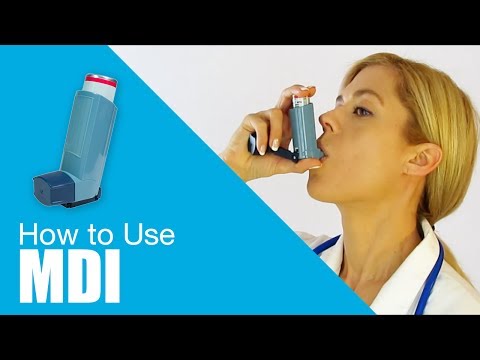
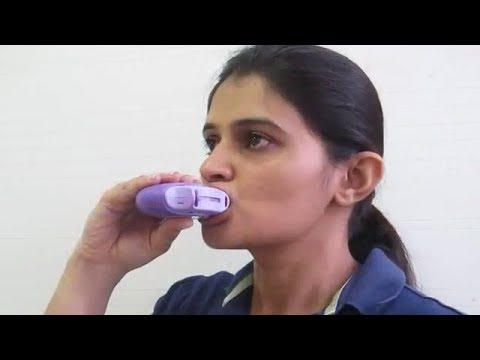
– Ensure the proper use of inhalers: a bad technique leads to the drug not being deposited in the bronchus, causing us to increase the medication many times without the patient improving.
A correct technique of use can be seen in this video for inhalers without corticosteroids:
Or this one for those containing corticosteroids.
For all other inhalers in order to learn the proper technique I recommend to click on this link about inhalers. Instructions may depend on each inhaler and should be reviewed at the pharmacy or with your doctor.
– Throat problems due to not performing mouthwashes: when you have been prescribed inhaled corticosteroids, you should perform rinses to prevent them from accumulating in the throat.
– Exposure to irritants: there are substances such as tobacco smoke, bleach or strong perfumes, among others, that can irritate your bronchus, being a purely irritating mechanism and not an allergy.
– Consider their symptoms as normal: it is quickly common to find patients who have not been able to breathe well for years and have simply normalized their situation without being aware of the long-term effects of poor control of their symptoms or of course of the possibility of having a more serious attack that could have fatal consequences.
– Assume the symptoms as allergic asthma: consider the patient who has allergic asthma and self-medicate without having made a first review. This is very dangerous since there are other diseases that can simulate asthma such as chronic lung diseases or even tumors, so a first review by your doctor is essential
What is the relationship between Asthma and Covid?
I refer you to an article published about it in another article in our blog