


Arizona cypress pollen allergy
Sneezing and itchy eyes can begin in the middle of winter. Find out when Arizona cypress releases pollen and how an allergist investigates and treats the symptoms.
Online consultation with Dr Tito Rodríguez Bouza · Allergy specialist · Consultations in Spanish
Initial private consultation · €150
Appointments through insurance
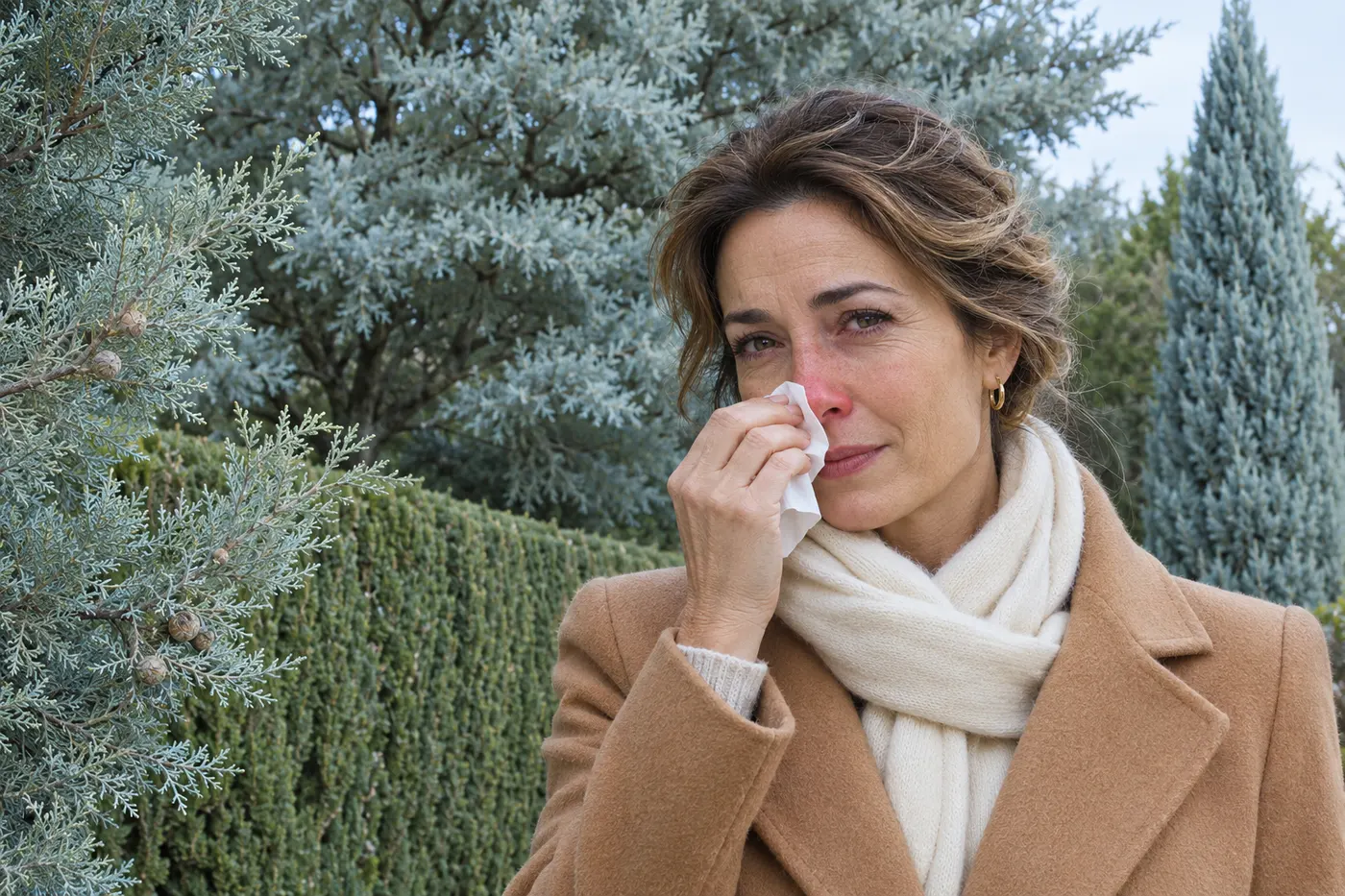
Arizona cypress pollen can cause sneezing, a blocked nose, itchy eyes and asthma symptoms in susceptible people. In Spain, winter exposure is particularly relevant. In mild cases the history may suffice. More severe cases often warrant blood tests when considering immunotherapy. One injection schedule involves monthly maintenance injections over three to four years. Some patients experience lasting relief. [1], [2], [6]
How to recognise winter cypress allergy
Arizona cypress (Cupressus arizonica, also called Hesperocyparis arizonica) is a wind-pollinated conifer in the Cupressaceae family. Hedges and ornamental trees in parks and gardens can be sources of allergic rhinitis, conjunctivitis and asthma symptoms. An itchy nose or eyes, repeated sneezing and watery discharge at a similar time each year suggest allergy. Fever calls for assessment for infection or another cause, which may coexist. [1], [5], [14]
In consultation I look for the exposure that explains the symptoms, adjust nasal and eye treatment, assess any chest symptoms and consider whether allergen immunotherapy offers a longer-term option.
When symptoms disrupt daily life
Poorly controlled rhinoconjunctivitis can affect sleep, concentration, work and exercise. Persistent cough, wheeze or breathlessness warrants assessment for asthma. In Spain winter cypress exposure matters, in France it is particularly relevant in the Mediterranean south, and in Russia the evidence concerns mild coastal areas such as Sochi. [1], [3], [8], [10], [19]
What causes the reaction?
Pollen proteins trigger inflammation in the nose, eyes and sometimes the airways, usually through IgE antibodies. A positive test indicates sensitisation. Clinical allergy requires a history of symptoms on exposure. Arizona cypress shares allergens with other cypresses and junipers. Cross-reactivity does not mean that every related tree causes symptoms or that their extracts are interchangeable. [2], [5], [6], [17]
When is Arizona cypress pollen in the air?
In Mediterranean areas, January and February are common, but favourable weather can bring the start forward to November. The season can overlap with Mediterranean cypress (Cupressus sempervirens), which usually pollinates later. In eastern Andalusia the family is recorded from autumn to spring, especially January–March, often peaking in February. [1], [5]
Many stations report Cupressaceae as a group. These counts cannot reliably distinguish Arizona cypress from other species. Pollen concentration and the proportion of people with allergy are different measures. [5]
Symptoms of Arizona cypress allergy
Common symptoms include bouts of sneezing, itching, clear nasal discharge and congestion. Both eyes may itch, water or look red. People with asthma may also cough, wheeze or experience chest tightness or breathlessness. Persistent symptoms can impair sleep and leave people tired. Symptoms alone do not identify the pollen responsible. [6], [19]
Diagnosis and the role of Cup a 1
I ask when symptoms occur, where the patient lives and works, whether hedges are nearby and what changes during travel. A diary alongside local counts can help. I also review medication and other causes of rhinitis. [6], [19]
Depending on the history, investigations include skin prick tests or blood tests for specific IgE to cypress-family pollen. Wheeze or breathlessness may require spirometry or an in-person assessment. [2], [6], [14]
Cup a 1 is a major Arizona cypress allergen. Testing this component may help when several tests are positive or allergen immunotherapy is being considered. Related proteins occur in other cypresses. A positive result alone cannot identify the original sensitising species or predict a response to treatment. A broad molecular panel is not needed for every patient. [2], [6], [8]
Treatment options
Treatment follows the symptoms and their severity. Options include intranasal corticosteroids, oral or nasal second-generation antihistamines, antiallergic eye drops and sometimes combination nasal sprays. Technique and regular use matter. Asthma requires its own treatment plan. Medication must be tailored, particularly for children, during pregnancy and with coexisting illness. [7], [14]
Immunotherapy may be considered when confirmed allergy causes significant symptoms despite appropriate treatment or to reduce its long-term burden. The extract, route and regimen depend on the relevant exposure, evidence for the product and local authorisation. Selected patients may need less medication and have fewer symptoms. Cure is not guaranteed. Guidelines recommend at least three years for lasting benefit in the indications studied. Evidence for grass or Japanese cedar products cannot simply be transferred to Arizona cypress. [8], [17]
Reducing exposure while keeping everyday activities
Check local Cupressaceae counts, for example at SEAIC. On windy or high-count days, adjust outdoor exercise and time beside hedges. Wraparound glasses and a particle-filtering mask can help with unavoidable exposure. Close car windows, maintain filters, air rooms briefly when local levels are lower and avoid drying laundry outdoors during peaks. Change clothes and wash your hair after substantial exposure. [4], [6], [9]
These measures reduce exposure without eliminating it. The aim is an ordinary, active life. Combine treatment with manageable precautions so that avoidance itself does not lower quality of life. [4], [6], [9]
Online allergy consultation
An initial private appointment takes up to 60 minutes depending on the case. Check insurance cover before booking. In a video consultation I can review symptoms, past reports and test results, discuss their relation to the pollen season and propose treatment and follow-up. Examination, skin tests or spirometry may require an in-person visit. Prescribing and follow-up across borders depend on the patient’s location and local rules. Consultations are in Spanish.
Consultation fees · Insurance arrangements
Frequently asked questions
Which months usually cause symptoms?
January and February are common in Spain and other Mediterranean areas. Check your nearest monitoring station for that season. [1], [5], [9]
Does a positive blood test mean I need immunotherapy?
The decision depends on exposure, symptoms, response to medication and evidence for the available extract. [6], [8]
Will all cypresses cause symptoms?
Cross-reactivity varies. A positive test does not imply allergy to all conifers or require avoiding foods without a history of reactions. [5], [6]
Can it make asthma worse?
Pollen can trigger lower airway symptoms. Recurrent cough, wheeze or breathlessness merits assessment alongside treatment for the nose and eyes. [2], [14]
When should I seek urgent care?
Seek urgent care for marked breathing difficulty, rapid deterioration or poor response to your prescribed rescue plan. An acute breathing crisis needs prompt in-person care. [14]
Arizona cypress and related pollen by country
Spain · France · Russia · United States · Germany · Sweden · China · Turkey · Japan · Saudi Arabia and Kuwait
| Country or area | Typical season | What the records show |
|---|---|---|
| Spain | January–March for the cypress family, often January–February for Arizona cypress | Timing and intensity vary locally. [1], [5] |
| France | Mediterranean south: winter into early spring | Several cypress species contribute. [3], [4] |
| Russia | Sochi: February–April in regional studies | Cypress pollen, without identification to species. [10] |
These historical calendars describe local species and climates. Consult current local counts for this year’s conditions.
Spain
In a clinical study of 499 patients attending hospitals around Madrid, 12.8% had positive skin tests to Arizona cypress. This is a clinical sample, not a national prevalence estimate. The University of Granada network records substantial cypress-family pollen in eastern Andalusia, especially January–March, well before the grass and olive seasons. [1], [2]
France
AtmoSud identifies cypress as a major source of pollen allergy in southern Mediterranean France. Exposure extends from winter into early spring. Arizona cypress can flower before Mediterranean cypress. Counts combine species, and the French health ministry emphasises regional and annual variation. [3], [4], [5]
Russia
Regional literature describes February–April cypress pollination in Sochi. A separate 2011–2013 study in Yalta, Crimea, attributed 49.7% of recorded annual pollen to cypress, with intense pollination in March–April. This is a share of pollen grains, not of allergic patients. Neither dataset identifies Arizona cypress alone or represents Moscow or St Petersburg. Travellers to the Black Sea coast should check local counts. [6], [10], [11]
United States
Arizona cypress is native to southwestern North America. Winter “cedar fever” in the south-central US is particularly associated with Ashe juniper (Juniperus ashei). Shared allergens do not make the species identical. Local trees and exposure guide testing and immunotherapy. [5], [12]
Germany
German monitoring records local Cupressaceae pollen, sometimes influenced by nearby planting. The monitoring station, surroundings and travel to Mediterranean areas matter when interpreting tests. The Spanish calendar cannot be applied countrywide. [13]
Sweden
Swedish health guidance highlights birch, alder, hazel, grasses and mugwort. The reviewed sources provide no national prevalence estimate specific to Arizona cypress. Check local exposure and travel history. [14]
China
Beijing studies document spring Cupressaceae pollen influenced by vegetation and wind, including Chinese juniper (Juniperus chinensis). These findings do not identify Arizona cypress as the cause or define a calendar for all China. [15]
Turkey
A review across 57 regions found the highest Cupressaceae counts between March and May. These include Cupressus and Juniperus. Interpret exposure according to local species and city. [16]
Japan
Sugi (Cryptomeria japonica) and hinoki (Chamaecyparis obtusa) are important sources of pollinosis. Both are related to Arizona cypress. Even their immunotherapy responses can differ, so an Arizona cypress extract cannot be assumed equivalent. [17]
Saudi Arabia and Kuwait
Middle Eastern pollen profiles vary. Mesquite, palms, acacias and olive are among the relevant trees. The sources do not establish a dominant role or single Arizona cypress calendar in either country. Ask about nearby planting, travel and timing of symptoms. [18]
Sources and references
Sources consulted on 9 November 2026. Regional studies and clinical samples retain their original geographical and time limits. Manufacturer factsheets are used for allergen names and test components alongside independent sources. General information cannot replace an individual assessment.
- Red UGR. Cupressaceae: floración y estacionalidad en Andalucía oriental.
- Domínguez-Ortega J et al. Prevalence of allergic sensitization to conifer pollen in a high cypress exposure area. Allergy Rhinol. 2016;7:200–206. doi:10.2500/ar.2016.7.0183.
- AtmoSud. Tout savoir sur les pollens en région Sud.
- Ministère de la Santé. Allergies aux pollens : les gestes à adopter.
- Thermo Fisher Scientific. Arizona cypress (t222). Allergen Encyclopedia.
- Thermo Fisher Scientific. Ciprés: interpretación del componente nCup a 1.
- ARIA–EAACI Guidelines 2024–2025. Allergic rhinitis.
- EAACI. Guidelines on Allergen Immunotherapy: Allergic rhinoconjunctivitis. Allergy. 2018;73:765–798.
- SEICAP. ¿Cómo tratar la alergia al polen en invierno?
- Belyaeva SN, Pirogova ME, Dudchenko LSh. Aeropalinological features of subtropical resorts of Russia. Вестник физиотерапии и курортологии. 2020;26(4):75–79. doi:10.37279/2413-0478-2020-26-4-75-79.
- Plant pollination calendar of the Southern Coast of Crimea and elimination therapy at the resort. Russian Journal of Allergy. 2021;18(4):18–28.
- Mountain cedar allergy: A review of current available literature. Ann Allergy Asthma Immunol. 2021.
- Stiftung Deutscher Polleninformationsdienst. Wochenprognose des Pollenflugs für Berlin.
- 1177. Pollenallergi.
- Qin X et al. Interactions among Cupressaceae pollen, air pollutants and meteorology in the urban and suburban areas of Beijing, China. Scientific Reports. 2025;15:14184. doi:10.1038/s41598-025-98316-1.
- Bıçakçı A et al. Allergenic Cupressaceae (cypress family) pollen concentrations in Turkey. Asthma Allergy Immunology. 2010;8:1–12.
- Osada T, Okano M. Japanese cedar and cypress pollinosis updated: New allergens, cross-reactivity, and treatment. Allergol Int. 2021;70:281–290.
- The Most Common Allergenic Tree Pollen Grains in the Middle East: A Narrative Review. 2019.
- NHS. Allergic rhinitis.
Author: Dr. Tito Rodríguez Bouza